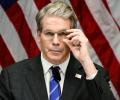
Describing the India-United States relationship as 'very complicated', US Treasury Secretary Scott Bessent on Wednesday hoped that 'at the end of the day, we will come together.'
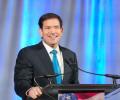
Rubio mentioned the recent conflict between India and Pakistan that President Donald Trump has repeatedly claimed he solved.

Stressing that wars are "very bad", Trump said that he seems to have "an ability to end them, to get people together" for which he uses the "power of the United States".
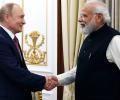
The US House Foreign Affairs Committee Democrats stated that imposing tariffs on India will not deter Russian President Vladimir Putin or address Russia's invasion of Ukraine.
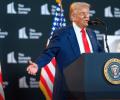
Former White House official John Bolton suggests that tariffs imposed on India by the US for purchasing Russian oil may have unintended consequences, potentially driving New Delhi closer to Beijing and Moscow.
The comments come ahead of Trump's high-profile meeting with Russian President Vladimir Putin, scheduled for Friday in Anchorage, Alaska.
United States Treasury Secretary Scott Bessent has warned that the secondary tariffs on India could go up if 'things don't go well' during talks between President Donald Trump and Russian President Vladimir Putin in Alaska on Friday.
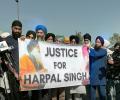
An elderly Sikh man was assaulted in Los Angeles, suffering a skull fracture and potential brain trauma. A suspect has been arrested for the attack.
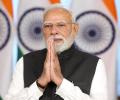
Prime Minister Narendra Modi is likely to address the UN General Assembly in September. The session will address global conflicts and trade negotiations between the US and India.
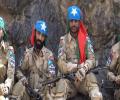
The action, it said, "demonstrates the Trump administration's commitment to countering terrorism".
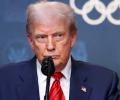
President Trump claims American tariffs imposed on India for purchasing Russian oil have negatively impacted Russia's economy, referring to India as Russia's major oil buyer. He also mentioned plans to meet with Putin and Zelenskyy, and claimed to have solved several wars, including the conflict between India and Pakistan.

Weeks before the Pahalgam attack, Munir said Pakistan will not forget the issue of Kashmir, asserting, "It was our jugular vein." His comments were trashed by India.
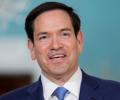
The United States 'got involved directly' when India and Pakistan went to war and President Donald Trump was able to deliver peace between the two nuclear-armed neighbours, Secretary of State Marco Rubio has claimed.
United States President Donald Trump has said there will be no trade negotiations with India until a dispute over tariffs is resolved, following his administration's decision to double tariffs on Indian imports.
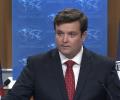
The US State Department has expressed concerns over India's trade imbalance with Washington and its purchase of Russian oil, emphasizing that President Trump has been clear with New Delhi on these issues.
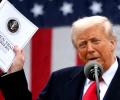
The additional 25 per cent duty will come into effect after 21 days or August 27.
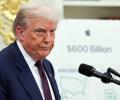
United States President Donald Trump has said India is 'very close' to China in terms of its purchases of Russian oil and will pay tariffs of 50 per cent as he indicated that 'you are going to see so much secondary sanctions'.
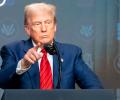
President Trump addresses questions about US imports from Russia and India's stance on purchasing Russian oil, hinting at potential tariffs.
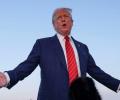
United States President Donald Trump on Tuesday said India has not been a good trading partner and announced that he will raise the tariffs on New Delhi 'very substantially' over the next 24 hours because it is buying Russian oil.

The Trump administration is implementing a pilot program requiring visitors from countries with high visa overstay rates to pay a bond of up to USD 15,000.
 © 2026 Rediff.com - Investor Information - Advertise with us - Disclaimer - Privacy Policy - Sitemap - Feedback - About us - Terms of use - Grievances